
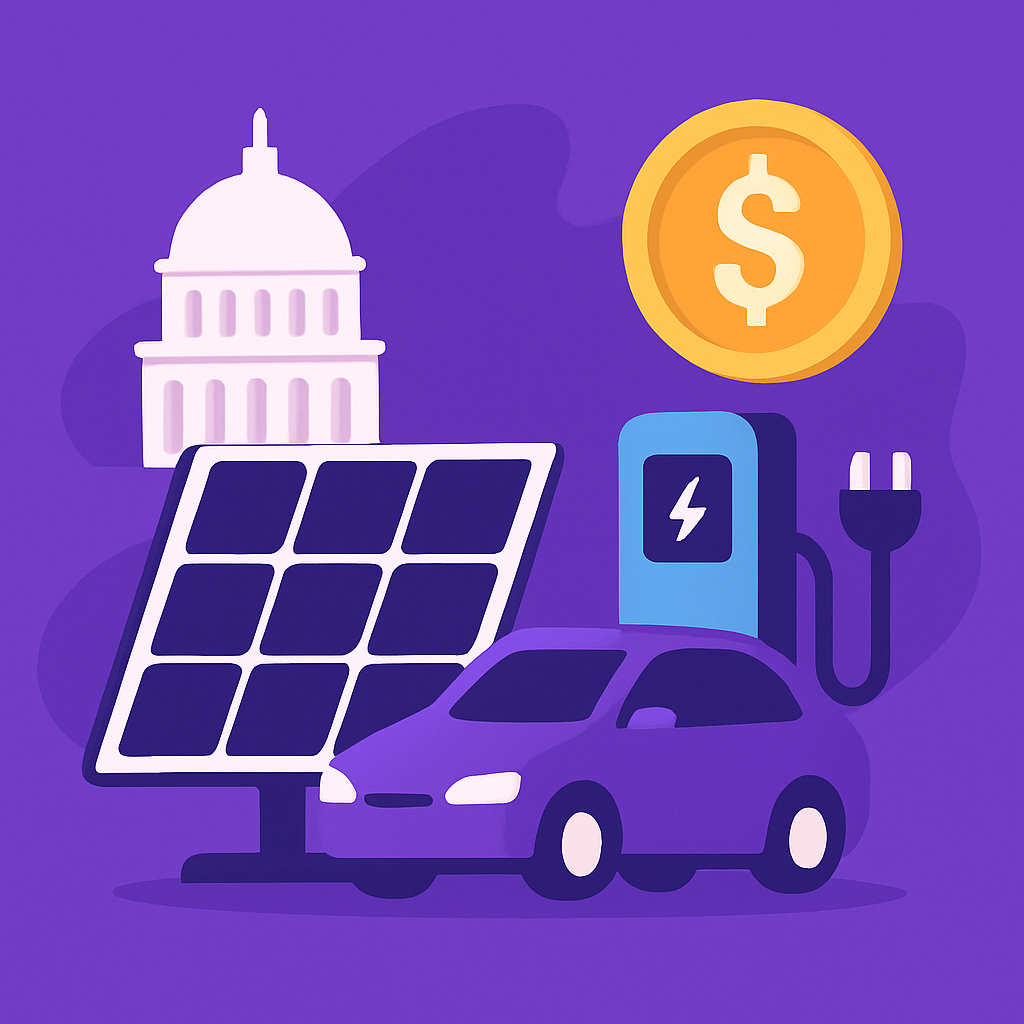
Maximizing Benefits: Government Incentives and Rebates for Solar & EV Charger Installation in Australia
With the growing emphasis on renewable energy and sustainability, Australia has emerged as a leader in the adoption of solar energy and electric vehicles (EVs). Government incentives play a crucial role in encouraging individuals and businesses to transition to cleaner energy solutions. This article explores the various government incentives available for solar installations and EV charger installations in Australia, providing insights into how these incentives can significantly reduce costs and enhance the return on investment (ROI).
Understanding Solar Incentives in Australia
Australia offers several incentives to promote the use of solar energy. Among the most significant are the Small-scale Technology Certificates (STCs) and Large-scale Generation Certificates (LGCs). These certificates form the backbone of the nation’s Renewable Energy Target (RET) scheme.
Explanation of STCs and LGCs
STCs are tradable certificates that can be claimed by individuals and small businesses installing solar, wind, or solar water heaters. The number of STCs generated depends on the system’s size and the location of the installation. Conversely, LGCs apply to larger-scale projects, typically those involving power stations.
Case Study: 6.6kW System in Sydney
Consider a typical 6.6kW solar system installed in Sydney. This system is eligible for a substantial number of STCs due to Sydney’s favorable sunlight conditions. As a result, homeowners can significantly reduce the upfront cost of installation.
Brand Comparison: Aiko vs. Trina Panels
When choosing solar panels, brands like Aiko and Trina offer excellent options. Trina panels are known for their high efficiency and durability, while Aiko panels offer competitive pricing without compromising on quality. Selecting the right brand can further enhance the benefits gained from government incentives.
Visual: Table of STC Values by State
| State | STC Value Per kW | Total STCs for 6.6kW System |
|---|---|---|
| NSW | 34 | 224 |
| VIC | 32 | 211 |
| QLD | 35 | 231 |
| SA | 33 | 218 |
| WA | 36 | 238 |
EV Charger Installation Rebates
As electric vehicles become more popular, the Australian government has introduced various rebates to incentivize the installation of EV chargers.
Overview of State-Specific Rebates
Different states offer different rebate schemes for EV charger installations. These rebates are designed to offset the costs associated with purchasing and installing home and commercial EV chargers.
Example: NSW Rebate for Residential EV Chargers
In New South Wales, residents can apply for rebates that cover a significant portion of the cost of purchasing and installing an EV charger at home. This initiative makes it more accessible for households to switch to electric vehicles, further promoting environmental sustainability.
Brand Comparison: Tesla Wall Connector vs. Zappi
For those considering EV chargers, the Tesla Wall Connector and Zappi are popular choices. The Tesla Wall Connector is known for its seamless integration with Tesla vehicles, while Zappi offers the advantage of solar charging capabilities, allowing users to optimize their solar energy use.
Visual: Chart Comparing EV Charger Costs After Rebates

Economic Impact and ROI Analysis
Understanding the economic impact and ROI of solar and EV charger installations is crucial for potential buyers. The payback period can vary significantly depending on the region and the specific installation details.
Detailed Analysis of Payback Periods by Region
The payback period for solar installations largely depends on factors such as local energy prices, the size of the system, and available government incentives. Regions with higher electricity prices tend to offer shorter payback periods.
Example: ROI for a Solar Installation in Melbourne
A solar installation in Melbourne, where electricity prices are relatively high, can yield a payback period of approximately 4-5 years. This swift ROI is due to both the savings on energy bills and the substantial government incentives available.
Brand Insight: Fronius vs. Enphase Inverters
Choosing the right inverter is essential for optimizing system performance. Fronius inverters are praised for their reliability and efficiency, while Enphase offers microinverters that allow for greater flexibility and monitoring capabilities.
Suggested Tool: Interactive ROI Calculator
To assist consumers in calculating their potential savings and ROI, an interactive ROI calculator can be an invaluable resource. This tool allows users to input specific details about their planned installations and receive tailored estimates.
Navigating Regional Differences
Feed-in Tariff (FiT) variations and regional incentives can significantly impact the financial outcomes of solar installations.
FiT Variations Across VIC, NSW, QLD
FiT rates differ from one state to another, affecting the overall savings achievable through solar energy.
Case Study: High FiT Impact in VIC
In Victoria, the FiT rate is particularly attractive, providing an additional financial benefit for solar system owners who feed excess energy back into the grid. This incentive can substantially reduce the payback period for solar installations.
Brand Comparison: SolarEdge vs. GoodWe
SolarEdge and GoodWe are two leading brands in solar inverter technology. SolarEdge is renowned for its advanced monitoring and optimization features, while GoodWe offers cost-effective solutions with reliable performance.
Visual: Infographic on Regional FiT Differences

Frequently Asked Questions
What are STCs and how do they work?
STCs are certificates that represent the environmental benefits of renewable energy. They are used to incentivize the installation of small-scale renewable energy systems by providing a financial benefit that reduces installation costs.
Can I claim multiple rebates for solar and EV chargers?
Yes, it is possible to claim multiple rebates, depending on the specific programs available in your state and the eligibility criteria. Always check the latest guidelines to ensure compliance.
How does the ROI differ between states?
The ROI can vary based on factors like local electricity tariffs, FiT rates, and the availability of state-specific rebates. Generally, states with higher energy costs and generous FiT rates offer quicker payback periods.
Are there limits on the number of STCs I can claim?
Yes, the number of STCs you can claim depends on the size of the system and the location of the installation. The Clean Energy Regulator provides detailed information on calculating STCs.
What brands offer the best warranty for solar panels?
Brands like LG, SunPower, and Trina are known for offering robust warranties that cover performance and product defects for extended periods, often ranging from 10 to 25 years.
How do I apply for an EV charger rebate?
To apply for an EV charger rebate, you typically need to submit an application through the relevant state government portal, providing details about the charger and proof of purchase and installation.
Conclusion & CTA
Government incentives for solar and EV charger installations are instrumental in driving Australia’s transition to renewable energy. By leveraging these incentives, homeowners and businesses can enjoy significant cost savings, quicker ROI, and contribute to a more sustainable future.
If you’re considering making the switch, now is the time to act. Book a free site assessment with Hilts today to explore how you can maximize these benefits in your location. Our experts are ready to assist you with everything from battery & hybrid systems to energy efficiency upgrades, ensuring you get the most out of your investment.
