
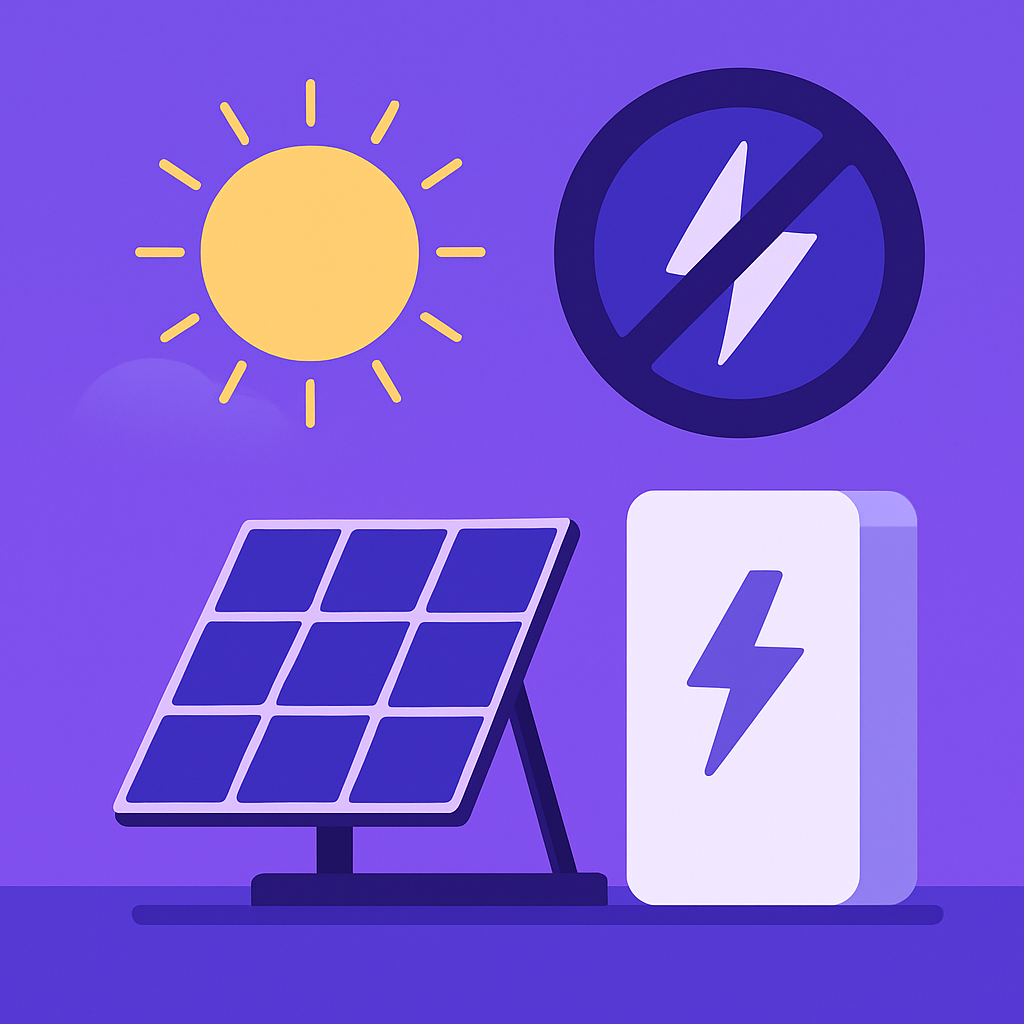
Stay Powered: Solar + Battery Storage to Beat Summer Blackouts
Introduction: Importance of Reliable Power During Australian Summers
As the mercury rises during the sweltering Australian summers, the demand for electricity shoots up, leading to frequent blackouts and power surges. The need for reliable power has never been more critical, especially with the increasing dependency on air conditioning systems. This is where solar energy combined with battery storage becomes a game-changer. Not only does it provide uninterrupted power, but it also offers numerous financial and environmental benefits.
Solar + Battery Storage: How It Works
Explanation of Solar and Battery Synergy
Solar panels capture sunlight and convert it into electricity through photovoltaic cells. This electricity can be used immediately or stored in a battery for later use. This synergy allows homeowners to harness solar energy even when the sun isn’t shining, providing continuous power during the night or cloudy days.
Case Study of a 6.6kW System in Sydney
Consider a typical 6.6kW solar system installed in Sydney. On an average sunny day, it generates around 26 kWh of electricity. By integrating a battery storage system, such as the Tesla Powerwall or BYD battery, excess electricity is stored rather than being sent back to the grid. This stored energy can then be used during peak evening hours, maximizing savings and ensuring power availability.
Brand Comparison: Tesla Powerwall vs BYD
When comparing the Tesla Powerwall and BYD batteries, both offer exceptional storage solutions but differ in features and price. The Tesla Powerwall is renowned for its high capacity and smart technology, while the BYD battery is favored for its modular design and competitive pricing. Choosing between them depends on specific needs and budget constraints, but both provide reliable backup power during outages.
Advantages of Solar + Battery Systems
Energy Independence and Blackout Protection
One of the most significant advantages of solar and battery systems is energy independence. By generating and storing your electricity, reliance on the grid diminishes. This independence is crucial during blackouts, ensuring that critical devices and systems remain operational.
Financial Savings and ROI Analysis
Investing in a solar and battery system leads to substantial financial savings over time. By reducing electricity bills and taking advantage of feed-in tariffs, the return on investment (ROI) is often realized within a few years. Detailed analysis shows that systems can pay for themselves in as little as 5-7 years, depending on usage patterns and local energy prices.
Comparison of State Rebates and Incentives
Australia offers various state-specific rebates and incentives to encourage solar adoption. For instance, the Solar Homes Program in Victoria provides rebates for both solar panels and battery systems. In New South Wales, the Empowering Homes program offers interest-free loans for solar and battery installations. These incentives significantly reduce the upfront costs and improve the overall ROI.
Choosing the Right System for Your Needs
Assessing Energy Consumption and System Size
Determining the right system size starts with assessing your household’s energy consumption. Installing a system that matches your usage ensures that you maximize savings and efficiency. Tools such as the Heating & Cooling Load Assessments can help fine-tune your energy needs.
Brand Comparison: Fronius vs SolarEdge Inverters
Inverters play a crucial role in any solar setup, converting DC electricity from the panels into AC electricity for home use. Fronius and SolarEdge are two leading inverter brands. Fronius is known for its reliability and robust performance, while SolarEdge offers advanced monitoring and optimization technologies. Here’s a comparison table illustrating their efficiency:
| Feature | Fronius | SolarEdge |
|---|---|---|
| Efficiency | 95% | 97% |
| Monitoring | Basic | Advanced |
| Warranty | 5 years standard | 12 years standard |
| Price | Moderate | Variable |
Real World Case Studies
Example of a Successful Install in Melbourne
A Melbourne family installed a 10kW solar system with a Tesla Powerwall, resulting in 90% self-sufficiency and significant savings on their electricity bills. This installation highlights the system’s adaptability to urban environments and varying weather conditions.
ROI and Payback Period Analysis
The family’s ROI analysis showed a payback period of 6 years, thanks to reduced energy bills and government incentives. This kind of financial performance is typical for well-planned solar and battery systems.
Warranty Insights from Australian Brands
Australian solar brands often offer comprehensive warranties, ensuring peace of mind for homeowners. Brands like Fronius and BYD provide warranties ranging from 5 to 10 years, with options for extensions, underscoring their commitment to quality and customer satisfaction.
Common Myths and Misconceptions
Debunking Myths About Initial Costs
A prevalent myth is that solar systems are prohibitively expensive. However, with falling prices of solar technology and generous government rebates, the initial costs have become much more manageable. In Brisbane, a study showed that long-term savings outweighed initial expenses significantly, showcasing the affordability of solar investments.
Case Study: Long-term Savings in Brisbane
A detailed case study in Brisbane revealed that homeowners saved over $1,500 annually on electricity bills after installing a solar and battery system. Over a decade, these savings accumulated to over $15,000, far exceeding the initial installation cost.
Visual: Infographic on Cost vs Savings
FAQ Section
What is the average payback period for solar + battery systems in Australia?
The average payback period ranges from 5 to 7 years, depending on system size, energy consumption, and local incentives.
Are there any government rebates for solar batteries?
Yes, various states offer rebates and incentives for solar battery installations. It’s advisable to check specific state programs for detailed information.
How do solar batteries work during a blackout?
Solar batteries provide stored energy during blackouts, ensuring that essential appliances remain powered until the grid is restored.
Which brands offer the best warranties?
Brands like Tesla, BYD, and Fronius offer some of the best warranties in the market, often extending up to 10 years with options for extensions.
Can I expand my solar system later?
Yes, many systems are designed for scalability. You can expand your system by adding more panels or batteries as needed.
How do solar batteries impact property value?
Homes equipped with solar and battery systems often see an increase in property value due to the appeal of lower energy costs and sustainable living.
What are the maintenance requirements?
Routine maintenance is minimal, usually involving periodic checks and cleaning. For more extensive maintenance, services like HVAC Maintenance & Repairs provide professional assistance.
Conclusion & CTA
As Australian summers grow increasingly intense, securing a reliable power source becomes essential. Solar and battery systems offer a robust solution, ensuring energy independence and financial savings. Consider a solar + battery system for your home to stay resilient against blackouts. For a customized energy solution, get a free AI-powered bill analysis from Hilts.
Book a free site assessment in your area with Hilts today and take the first step towards energy independence and sustainability.
