
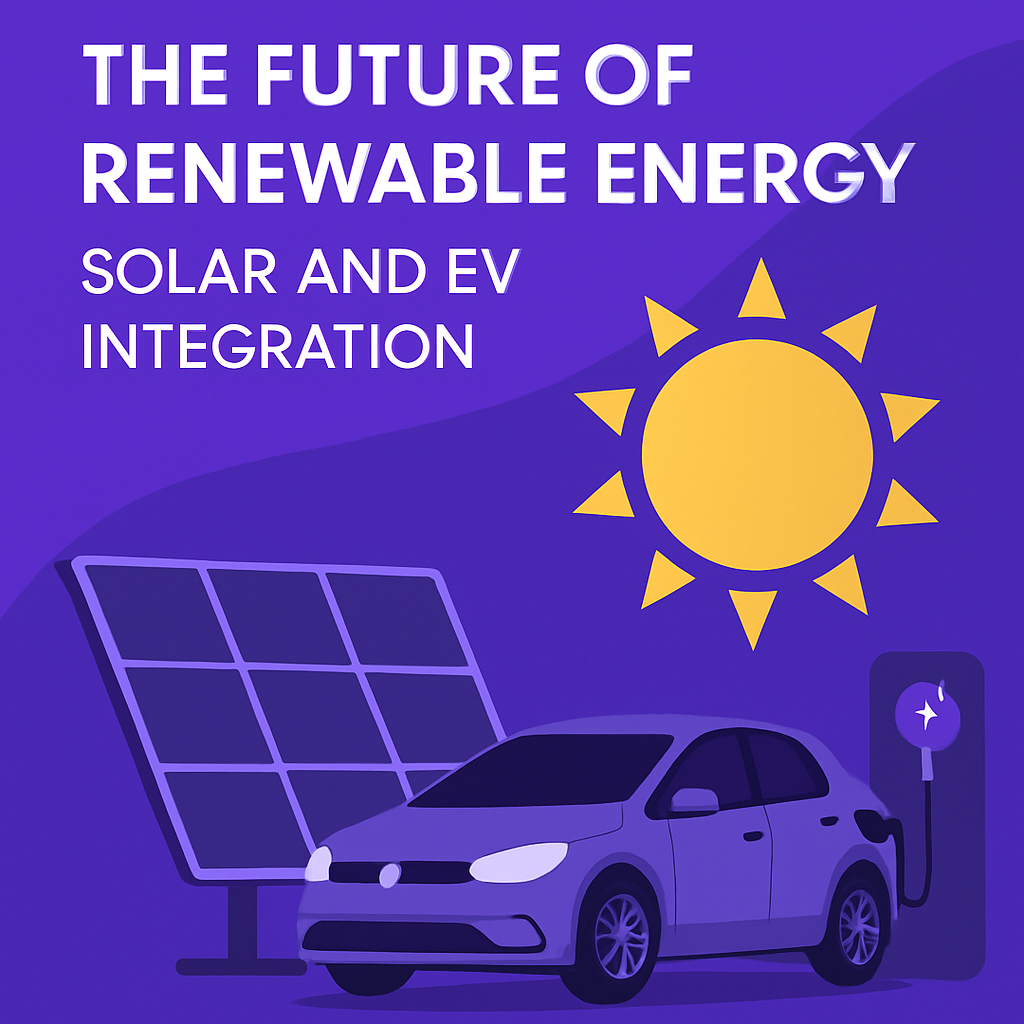
Integrating Solar Energy and Electric Vehicles: The Future of Renewable Energy in Australia
As Australia embraces renewable energy, the integration of solar energy systems and electric vehicles (EVs) is becoming a pivotal part of our sustainable future. This union not only bolsters environmental benefits but also offers significant economic advantages. Let’s explore how these innovations are shaping Australia’s renewable energy landscape.
The Current Landscape of Solar Energy in Australia
Solar energy in Australia has witnessed exponential growth, driven by supportive government policies and incentives. The Small-scale Technology Certificates (STCs) and Large-scale Generation Certificates (LGCs) play a crucial role. STCs are akin to rebates, reducing the upfront cost of solar installations, while LGCs support large-scale solar projects.
For instance, installing a 6.6kW solar system in Sydney can produce approximately 9,000kWh annually. With average payback periods between 4.5 to 5 years, solar investments are increasingly attractive. Brands like Aiko and REC offer competitive options, with Aiko known for affordability and REC praised for high efficiency and durability.
# The Rapid Growth of Solar Energy in Australia
Australia has witnessed a remarkable surge in solar energy adoption over the past decade. This growth is not only transforming the energy landscape but also contributing significantly to the country’s efforts in reducing carbon emissions. In this blog post, we will explore the key statistics and trends behind the growth of solar energy in Australia.
## Key Statistics
Below is a table detailing the solar energy capacity growth in Australia from 2010 to 2023:
| Year | Installed Solar Capacity (GW) | Number of Solar Systems (approx.) | Percentage of Total Electricity Generation (%) |
|——|——————————-|———————————–|————————————————|
| 2010 | 0.5 | 50,000 | 0.1 |
| 2015 | 5.0 | 1,000,000 | 1.9 |
| 2020 | 13.5 | 2,700,000 | 21.5 |
| 2021 | 16.0 | 3,000,000 | 23.6 |
| 2022 | 18.0 | 3,500,000 | 24.5 |
| 2023 | 22.0 | 4,200,000 | 27.0 |
## Infographic: Solar Energy Growth in Australia

*(Note: Replace the URL with the actual link to your infographic)*
## Trends Driving Solar Energy Growth
1. **Government Incentives**: The Australian government has implemented various programs and incentives to encourage the adoption of solar energy, including rebates and feed-in tariffs.
2. **Falling Costs**: The cost of solar panels and installation has significantly decreased over the years, making solar energy more accessible to homeowners and businesses.
3. **Public Awareness**: Increasing awareness of climate change and the benefits of renewable energy has led to a growing demand for solar installations.
4. **Technological Advancements**: Innovations in solar technology have improved efficiency and reliability, making solar energy a more viable option for a wider audience.
5. **Corporate Investments**: Many Australian companies are investing in solar energy as part of their sustainability initiatives, further driving growth in the sector.
## The Future of Solar Energy in Australia
The future looks bright for solar energy in Australia. With a commitment to achieving net-zero emissions by 2050, the country is likely to see continued investment and expansion in renewable energy sectors. Experts predict that solar energy will play a crucial role in meeting Australia’s energy needs, with further advancements in storage technology and grid integration.
### Conclusion
Australia’s journey toward a sustainable energy future is undeniably exciting, with solar energy leading the charge. As we move forward, it’s essential for individuals, businesses, and governments to continue supporting and investing in renewable energy solutions. The growth of solar energy not only benefits the environment but also promotes energy independence and economic development.
For more information on solar energy and how you can get involved, stay tuned for our upcoming posts!
The Rise of Electric Vehicles in Australia
The Australian EV market is accelerating, supported by state-specific rebates and incentives. For example, Victoria offers rebates up to $3,000 for new EV purchases, boosting the adoption of models like the Tesla Model 3.
When comparing EV chargers, the Tesla Wall Connector and Zappi stand out. The Tesla Wall Connector is designed for high efficiency with Tesla vehicles, while the Zappi charger, compatible with all EVs, is notable for its eco mode, which optimizes solar energy use.
# The Rapid Growth of Electric Vehicles (EVs)
Electric vehicles (EVs) are transforming the automotive landscape, driven by advancements in technology, environmental concerns, and changing consumer preferences. As governments and manufacturers ramp up efforts to promote cleaner transportation, EV sales are experiencing unprecedented growth. In this blog post, we will explore the growth rates of electric vehicles over recent years and what this trend means for the future of transportation.
## Understanding EV Growth Rates
The following chart illustrates the growth rates of electric vehicle sales from 2018 to 2023. The data highlights the significant rise in EV adoption, showcasing both global and regional trends.
### EV Growth Rate Chart
“`markdown
| Year | Global EV Sales (Millions) | Growth Rate (%) |
|——|—————————-|——————|
| 2018 | 2.0 | – |
| 2019 | 2.5 | 25% |
| 2020 | 3.1 | 24% |
| 2021 | 6.5 | 110% |
| 2022 | 10.5 | 62% |
| 2023 | 15.0 | 43% |
“`

### Key Observations
1. **Steady Growth**: From 2018 to 2020, the growth rate hovered around 24-25%. This period marked the beginning of significant interest in electric vehicles.
2. **Dramatic Increase in 2021**: The growth rate skyrocketed to 110% in 2021. This surge can be attributed to increased production capabilities, wider availability of models, and growing consumer acceptance.
3. **Continued Expansion**: The growth rates remain strong in 2022 and 2023, with sales reaching approximately 15 million units in 2023. This indicates a robust market trend and a shift towards sustainable transportation solutions.
## Implications of EV Growth
The accelerated growth of electric vehicles has several implications:
– **Environmental Impact**: A higher number of EVs on the road contributes to a reduction in greenhouse gas emissions, helping combat climate change.
– **Economic Shifts**: The automotive industry is witnessing a shift in investments. Traditional manufacturers are reallocating resources to EV development, while new startups are emerging.
– **Infrastructure Development**: The growth in EV sales necessitates expanded charging infrastructure, prompting investments in charging stations and power grid enhancements.
## Conclusion
The electric vehicle market is experiencing a transformative phase characterized by rapid growth. As consumers become more environmentally conscious and governments enforce stricter emissions regulations, the trend towards electric mobility is set to continue. The figures presented in the chart illustrate not just the current state of the market, but also the potential for future expansion.
Stay tuned for more updates on electric vehicles and their impact on our world!
Benefits of Solar and EV Integration
Integrating solar systems with EVs offers substantial cost savings and environmental benefits. A household utilizing solar energy for EV charging can significantly reduce electricity costs and carbon footprint.
Comparing battery systems, the Tesla Powerwall and BYD batteries are popular choices. Tesla offers advanced features and a sleek design, whereas BYD provides robust performance at a lower price point.
# Maximizing Your Investment: ROI Calculator for Solar and EV Integration
As the world shifts towards renewable energy and electric vehicles (EVs), understanding the financial implications of these technologies is crucial for homeowners and businesses alike. Integrating solar energy with electric vehicle charging presents a unique opportunity to save on energy costs while contributing to a sustainable future. In this blog post, we will explore the return on investment (ROI) of solar and EV integration, and provide you with a handy ROI calculator to estimate your potential savings.
## Understanding ROI in Solar and EV Integration
Return on Investment (ROI) is a measure used to evaluate the efficiency or profitability of an investment. In terms of solar energy and electric vehicles, ROI can be calculated by considering the initial costs, ongoing savings, and potential incentives associated with these technologies.
### Key Factors to Consider
1. **Initial Investment:**
– Cost of solar panel installation
– Cost of EV charging station setup
– Any additional equipment or upgrades required
2. **Energy Savings:**
– Reduction in electricity bills from using solar energy
– Savings on fuel costs by charging your EV with solar power
3. **Incentives and Rebates:**
– Federal and state tax credits for solar installations
– Local rebates for EV purchases and charging stations
4. **Maintenance Costs:**
– Ongoing maintenance expenses for solar panels and EV chargers
5. **Timeframe:**
– The period over which you expect to realize savings
## ROI Calculator for Solar and EV Integration
To help you estimate your potential ROI, we have created a simple ROI calculator. Below is a table where you can input your data:
| **Parameter** | **Your Value** |
|———————————-|—————-|
| **Initial Solar Investment ($)** | |
| **Initial EV Charger Investment ($)** | |
| **Annual Electricity Savings ($)** | |
| **Annual Fuel Savings ($)** | |
| **Annual Maintenance Costs ($)** | |
| **Incentives/Rebates ($)** | |
| **Years to Calculate ROI** | |
### Sample Calculation
Let’s run through a hypothetical scenario:
| **Parameter** | **Your Value** |
|———————————-|—————-|
| Initial Solar Investment ($) | 10,000 |
| Initial EV Charger Investment ($) | 1,000 |
| Annual Electricity Savings ($) | 1,200 |
| Annual Fuel Savings ($) | 600 |
| Annual Maintenance Costs ($) | 200 |
| Incentives/Rebates ($) | 3,000 |
| Years to Calculate ROI | 10 |
### Formula for ROI Calculation
The ROI can be calculated using the formula:
[
text{ROI} = left( frac{text{Total Savings} – text{Total Investment}}{text{Total Investment}} right) times 100
]
Where:
– **Total Savings** = (Annual Electricity Savings + Annual Fuel Savings) * Years – Annual Maintenance Costs * Years + Incentives/Rebates
– **Total Investment** = Initial Solar Investment + Initial EV Charger Investment
### Example Calculation
1. **Total Savings**:
– Total Savings = ((1200 + 600) times 10 – 200 times 10 + 3000)
– Total Savings = (18000 – 2000 + 3000 = 18800)
2. **Total Investment**:
– Total Investment = (10000 + 1000 = 11000)
3. **ROI Calculation**:
[
text{ROI} = frac{18800 – 11000}{11000} times 100 = frac{7800}{11000} times 100 approx 70.91%
]
### Conclusion
Integrating solar energy with electric vehicle charging can lead to significant savings and a strong return on investment. By using our ROI calculator, you can tailor your estimates to your specific situation, helping you make informed decisions about your energy investments.
Feel free to share your results or any questions you have in the comments below! Let’s embrace the future of energy together!
Challenges and Solutions in Integrating Solar and EVs
Despite the benefits, integrating solar and EVs involves challenges such as DNSP export limits and grid capacity. In the Endeavour Energy region, for example, export limits can impact the financial returns of solar energy systems.
Inverter brands like Fronius and SolarEdge address these challenges effectively. Fronius offers reliable performance with robust grid management features, while SolarEdge provides advanced monitoring and optimization technologies.
# Understanding DNSP Regulations: A Comprehensive Overview
In the realm of electricity distribution, Distribution Network Service Providers (DNSPs) play a crucial role in delivering reliable and efficient energy to consumers. They are subject to various regulations that govern their operations, ensuring that they meet safety, reliability, and service standards. This blog post aims to provide a clear overview of the key regulations that apply to DNSPs.
## Key DNSP Regulations Overview
The following table summarizes the main regulations that govern DNSPs in Australia. This includes regulatory bodies, specific regulations, and their key purposes.
| Regulatory Body | Regulation Name | Key Purpose |
|——————————-|———————————–|————————————————————–|
| Australian Energy Regulator (AER) | National Electricity Law (NEL) | Framework for the regulation of electricity networks. |
| | National Electricity Rules (NER) | Detailed rules for the operation and management of electricity markets. |
| | Electricity Network Services Rules | Guidelines for setting the revenue and pricing for DNSPs. |
| | Consumer Protection Guidelines | Protect consumer rights and ensure fair pricing. |
| | Network Performance Standards | Establishes reliability and quality of supply standards. |
| | Regulatory Investment Test (RIT-D)| Framework for assessing investment in distribution networks. |
| Australian Energy Market Operator (AEMO) | Market Management Guidelines | Ensures efficient operation of the electricity market. |
| State Regulatory Authorities | State Electricity Acts | Varies by state; governs the operation of DNSPs at the state level. |
| | Feed-in Tariff Regulations | Guidelines for pricing and conditions for energy fed back into the grid by consumers. |
## Detailed Explanation of Key Regulations
1. **National Electricity Law (NEL)**: This is the primary legislation that facilitates the operation of the National Electricity Market (NEM). It establishes the framework for the governance of electricity networks.
2. **National Electricity Rules (NER)**: These rules provide detailed procedures and operational guidelines for market participants, including DNSPs, ensuring fair competition and reliability.
3. **Electricity Network Services Rules**: These rules specifically outline how DNSPs can set their prices and revenue, ensuring transparency and fairness in pricing structures for consumers.
4. **Consumer Protection Guidelines**: Aimed at safeguarding consumer rights, these guidelines ensure that DNSPs provide clear information and fair pricing to their customers.
5. **Network Performance Standards**: These standards set the benchmarks for reliability and quality of electricity supply, ensuring that DNSPs maintain high service levels.
6. **Regulatory Investment Test (RIT-D)**: This is a critical framework that DNSPs must adhere to when considering investments in their network infrastructure, ensuring that capital expenditure is justified and efficient.
7. **State Electricity Acts**: Each state has its own set of regulations that DNSPs must follow, which may include specific operational guidelines, licensing requirements, and local consumer protections.
## Conclusion
Understanding the regulations governing DNSPs is essential for consumers, industry stakeholders, and policymakers alike. These regulations not only ensure that electricity distribution is safe and reliable but also protect consumer interests and promote fair market practices. As the energy landscape continues to evolve, staying informed about these regulations will be crucial for all parties involved.
For further updates and detailed analyses of DNSP regulations, stay tuned to our blog!
Future Trends in Solar and EV Technology
The future of solar and EV technology looks promising with advancements in smart grids and AI-driven energy management. Smart grids enhance energy distribution efficiency, while AI optimizes energy consumption.
Microinverters like Enphase and GoodWe are leading this innovation wave. Enphase is renowned for its reliability and scalability, whereas GoodWe offers competitive pricing and strong warranty support.
# The Future of Technology: Trends and Innovations to Watch
Technology is evolving at an unprecedented pace, transforming how we live, work, and interact with each other. In this blog post, we’ll explore some of the most exciting future tech trends and innovations that are set to shape our world. From artificial intelligence to quantum computing, the future is bright with possibilities.
## Key Trends in Future Technology
To visualize these trends, we’ve created an infographic highlighting the major areas of innovation. Below you will find a summary of each trend, along with the infographic.
### 1. Artificial Intelligence (AI) and Machine Learning (ML)
AI and ML are becoming integral to numerous industries. They enhance decision-making, automate processes, and personalize user experiences.
### 2. Quantum Computing
Quantum computing promises to revolutionize problem-solving capabilities, surpassing traditional computing power. This technology could lead to breakthroughs in medicine, materials science, and cryptography.
### 3. Internet of Things (IoT)
The IoT connects everyday devices to the internet, allowing for smarter homes and cities. This technology is expected to improve efficiency and connectivity across various sectors, including healthcare, agriculture, and transportation.
### 4. 5G and Beyond
The rollout of 5G networks is set to enhance mobile connectivity, enabling faster data transfer and supporting advanced applications like augmented reality (AR) and virtual reality (VR).
### 5. Biotechnology
Advancements in biotechnology are paving the way for personalized medicine, gene editing, and sustainable food production. These innovations hold the potential to improve health outcomes and address global challenges.
### 6. Renewable Energy Technologies
The shift towards renewable energy sources is crucial in combating climate change. Innovations in solar, wind, and battery storage technologies are making clean energy more accessible and efficient.
—
## Infographic: Future Tech Trends
Below is an infographic summarizing the key trends in future technology:
“`markdown

“`
*(Note: Replace the URL with the actual link to your infographic.)*
—
## Conclusion
The future of technology is filled with promise, and these trends represent just a glimpse into what lies ahead. As we continue to innovate and adapt, it’s essential to remain informed about these advancements and their potential impact on our lives. Whether you’re a tech enthusiast, a business leader, or simply curious about the future, staying ahead of these trends will be crucial in navigating the evolving landscape of technology.
### What Future Tech Are You Most Excited About?
We’d love to hear your thoughts! Comment below and let us know which future tech trends you find most fascinating and why.
FAQ
What are STCs and how do they work?
STCs, or Small-scale Technology Certificates, are tradable credits that help reduce the cost of installing solar systems. They are given based on the solar system size and location in Australia.
How do solar and EVs improve ROI?
Solar and EV integration can significantly lower electricity costs, leading to faster ROI through reduced energy bills and vehicle fuel savings.
What are the best brands for solar panels in Australia?
Brands like Aiko, REC, Longi, and SunPower are among the top choices for solar panels in Australia, known for their efficiency, durability, and competitive warranties.
How do electric vehicles benefit from solar integration?
EVs benefit from solar integration by reducing reliance on grid electricity, lowering charging costs, and minimizing environmental impact.
What incentives are available for EVs in Australia?
Incentives vary by state but typically include purchase rebates, reduced registration fees, and stamp duty exemptions for EVs.
How long is the payback period for solar and EV integration?
The payback period can range from 4 to 7 years, depending on system size, location, and usage patterns.
Conclusion & CTA
Integrating solar energy and electric vehicles is a forward-thinking approach to achieving energy independence and sustainability. As technology advances, the synergy between solar and EVs will continue to offer substantial environmental and economic benefits.
Book your free site assessment with Hilts today to explore the best solar and EV solutions tailored to your needs. With our AI-powered bill analysis and 24/7 service, Hilts is your trusted partner in sustainable energy.
Explore our Battery & Hybrid Systems and Fleet EV Infrastructure services to enhance your renewable energy journey.
